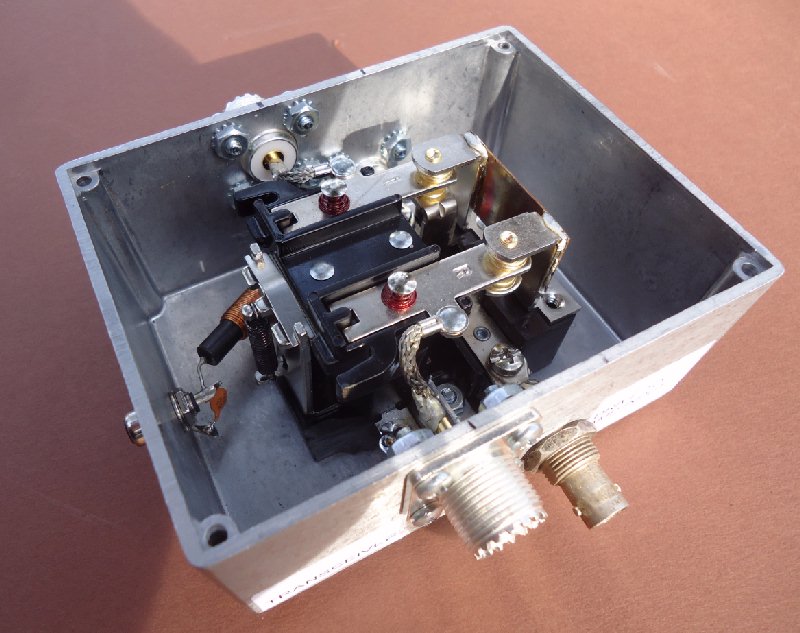
In the 2003 Proceedings of the Southeast VHF Society Conference, WA4NJP published an article showing how a Magnecraft W199AX-13 DPDT power relay could be used with a Bud CU-234 cast aluminum box to create a DPDT coaxial relay capable of handling high RF power. If you do not already have a relay to switch the antenna feedline between a receiver and the transmitter, this type of relay is what you need to completely switch an amplifier and and out of the circuit for a transceiver. This original article in .pdf format can be downloaded from my website HERE.
My initial interest was to use his recommendations and construction techniques to build a SPDT coaxial relay that could be used as a main Transmit/Receive relay or an A-B switch to select between two different 6m antennas.
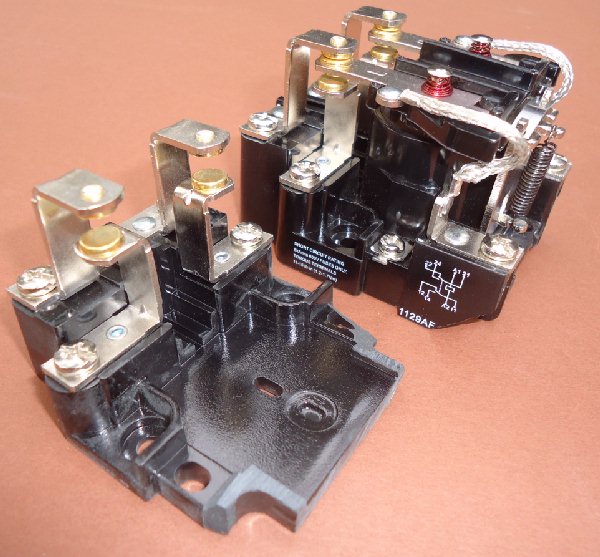
The same above switch and enclosure were used as described in the original WA4NJP article. (I found them both in stock at Mouser Electronics.) I used a hacksaw to cut 3/8" off the bottom of the relay base so the relay would fit into the enclosure. The photo to the right shows how I removed the coil and moving contact assembly from the relays to saw off the bottoms.
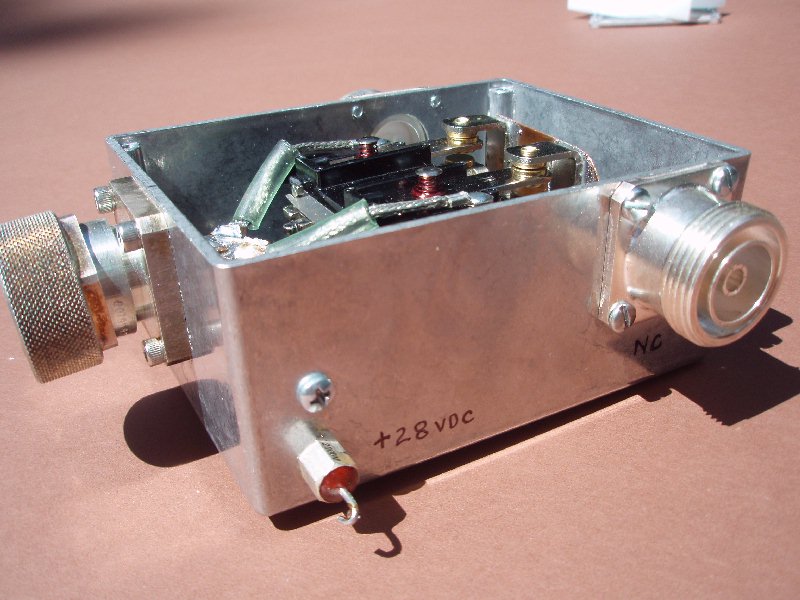
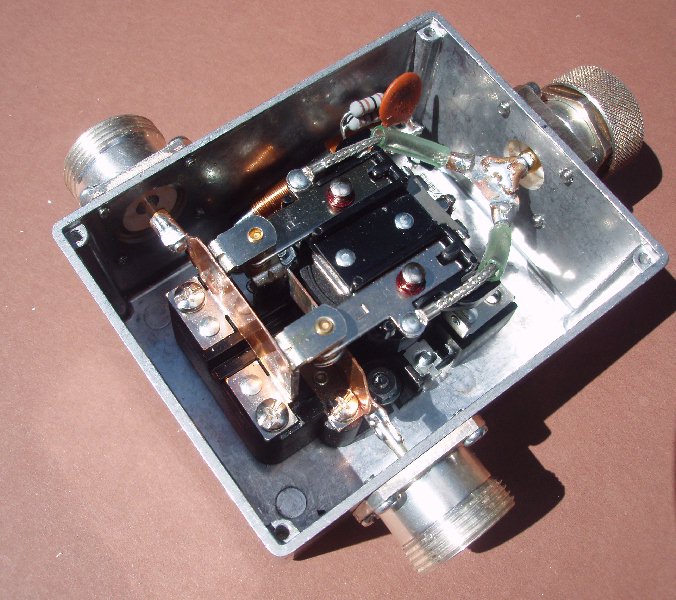
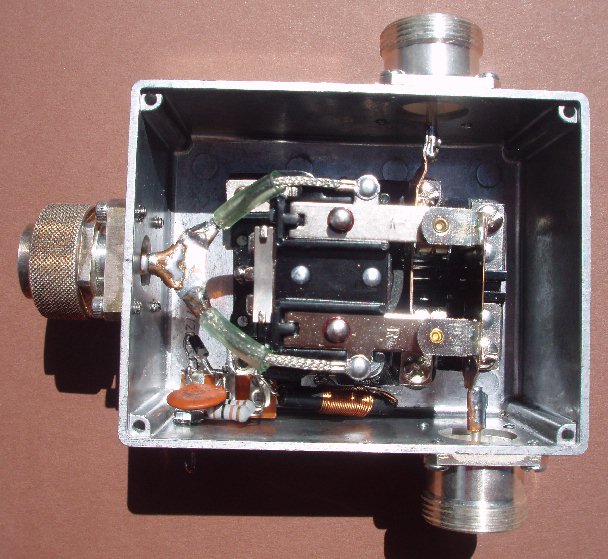
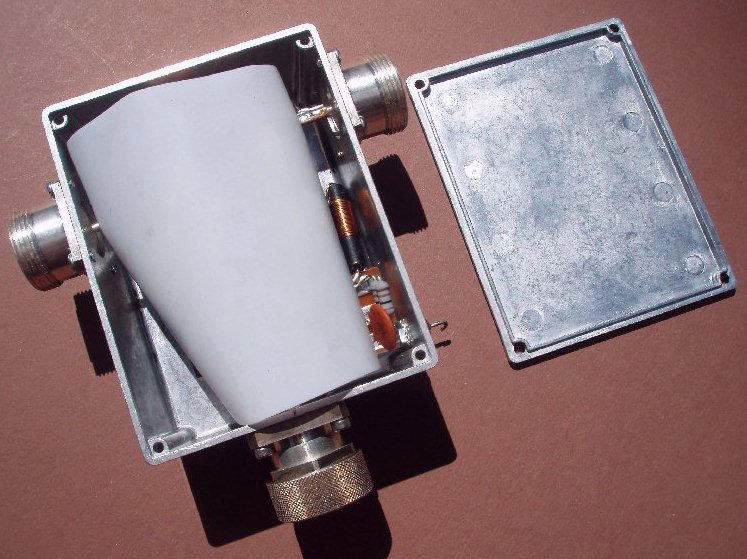
I then soldered copper straps across the pair of NC and NO terminals and extended them to either side of the box to 7/16 DIN connectors. On this first SPDT relay, I disconnected the flexible wires from the screw terminals and connected them together at the Common connector with a copper yoke. All copper straps had their corners rounded and filed smooth to reduce arcing.